

TRAVEL WITH MEDICINES AFTER 50
TSA screening • Original labels • Device planning • Destination rules
Quick answer: Keep medically necessary medicines and essential devices accessible during travel, verify U.S. airport screening requirements, and check the rules of every international destination and transit country before departure. The TSA permits medically necessary liquids above the ordinary 3.4-ounce limit for U.S. checkpoint screening, subject to declaration and screening. That does not mean any medicine or device is legal everywhere abroad, or that an airline will support every device without advance arrangements.
Many adults take prescriptions, carry over-the-counter products, or use equipment such as CPAP machines, glucose monitors or mobility devices. Travel preparation can reduce uncertainty without turning a routine trip into a medical project. This guide is for travelers over 50, but the questions are useful at any age. It covers logistics and official rules, not medication selection, dosages or individualized treatment.
1. Create a one-page medication travel inventory
Before booking a long flight or international journey, make a list of medication names, how they are labeled, the prescription provider’s contact, storage needs, and whether an essential supply could be difficult to replace. Confirm the necessary quantity with a qualified healthcare professional and pharmacist, especially when your itinerary includes missed flights or lengthy transfers.
- List prescription and nonprescription medicines that you actually expect to carry.
- Check which items require special storage, refrigeration or protection from heat.
- Ask the prescribing professional what documentation is useful for the destination and your personal circumstances.
- Confirm whether enough medicine can legally and practically be dispensed for the planned trip.
- Store the list securely with your key trip documents; avoid sharing sensitive health information in public messages.
The CDC’s Traveling Abroad with Medicine guidance advises packing enough for the trip with an allowance for disruptions, keeping products in their original labeled containers, and investigating legality at the destination. Do not assume pharmacy refills work the same way in every state or country.
2. Know how the TSA handles medicine in carry-on luggage
The Transportation Security Administration screens medicines and medical supplies at U.S. checkpoints. Medically necessary liquids, medications and creams may exceed the usual 3.4-ounce/100-milliliter limit in carry-on baggage when reasonably necessary. These items may require declaration and separate screening; they are not required to fit into the ordinary quart-sized liquids bag.
Tell the screening officer about medically necessary liquids and associated supplies before screening and be prepared for additional inspection. TSA decisions at the checkpoint can depend on security procedures and the item itself. Its Travel Tips factsheet explains screening exceptions and general requirements. If an officer requests additional checks, calmly ask about the available screening options and speak with a supervisor when necessary.
For solid medication, original pharmacy labeling is not universally a TSA checkpoint requirement, but original labeled packaging can simplify other parts of travel and is especially important for international entry rules. State, destination, airline and pharmacy requirements are separate matters. Avoid suggesting TSA security clearance automatically grants legal import permission.
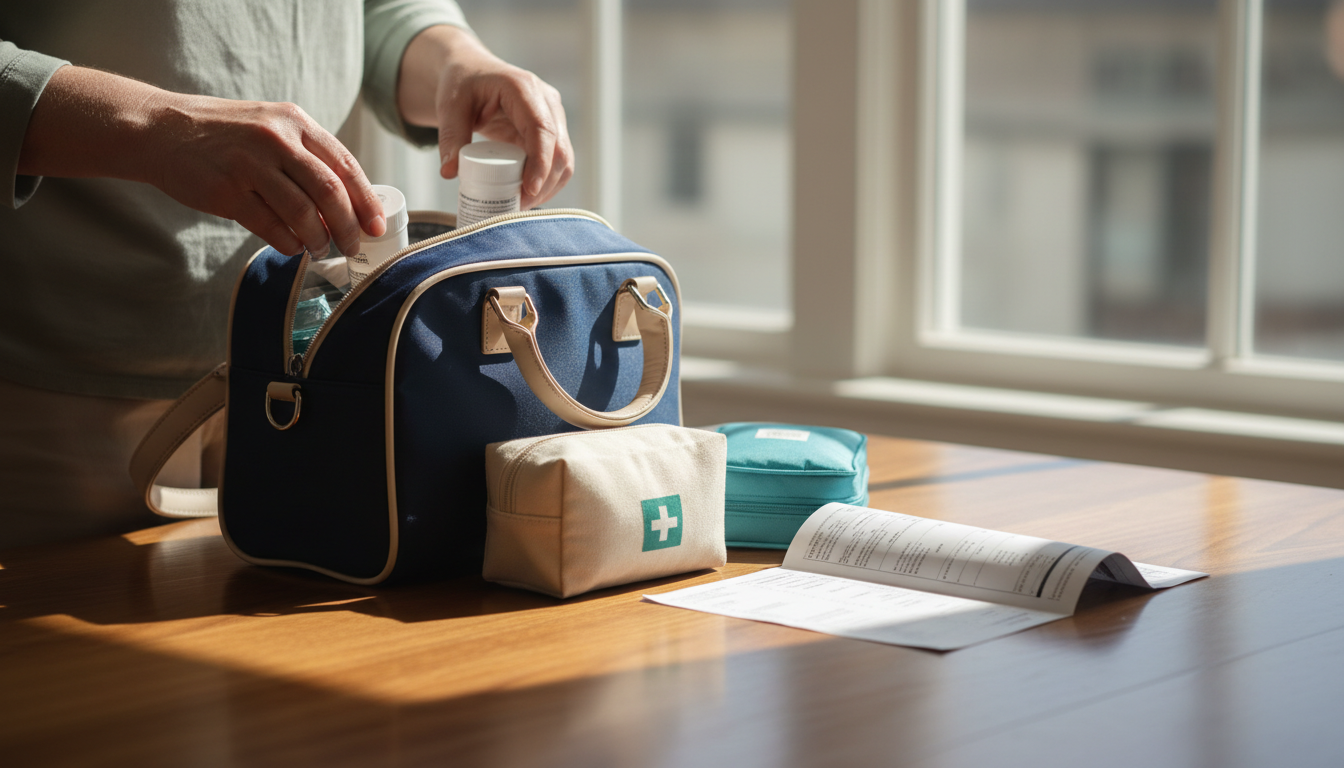
KEEP ESSENTIAL ITEMS CLOSE
Original containers • Carry-on • Storage • Prescription contacts
3. Ask about medical devices before the day of departure
A CPAP, insulin pump, glucose monitor, assistive device or portable oxygen concentrator can present different screening and cabin-use questions. Check both TSA screening procedures and the airline’s device policy. The airline may have rules about power sources, batteries, airline-approved portable oxygen concentrators, or documentation for using powered equipment in flight.
Do not detach a medically necessary device on the assumption that every screening checkpoint requires it. Explain what the equipment does and follow the TSA’s current device-specific instructions. If you need accommodations, ask early about screening options, accessible boarding and seating; the airline’s disability assistance service is separate from TSA checkpoint screening.
For travelers with a disability or medical condition, TSA Cares provides a route for questions about checkpoint procedures and assistance. Airline assistance and in-flight medical-device requirements remain the airline’s responsibility. Confirm arrangements rather than relying on an unsupported guarantee.
4. International medicine rules may be more restrictive
A prescription legal in the United States may be restricted or prohibited at a destination, even when a U.S. doctor prescribed it. Requirements differ by substance, form, amount, labeling, proof of medical need and permission from the destination authority. Transit countries also warrant checking when a traveler will enter their jurisdiction or comply with local import rules.
- Look up the official embassy, customs or health authority rules for the destination and any relevant transit point.
- Ask specifically about restricted medicines or controlled substances without assuming an American prescription is sufficient.
- Confirm whether a doctor’s letter, original prescription, translation or advance permission is required.
- Read restrictions on maximum quantities and original packaging.
- Do not conceal or relabel products to avoid inspection; ask your prescriber about lawful alternatives if a medicine cannot enter a country.
The U.S. Department of State advises verifying medical and country-specific entry requirements through its international travel planning resources. The CDC gives practical guidance on medicine containers, supplies and local restrictions. When government pages disagree, seek clarification from the destination’s competent authority rather than relying on a social-media anecdote.
5. Protect temperature-sensitive medicine in transit
Some medicines require a defined temperature range. Before travel, confirm that range and the maximum safe time outside it with your pharmacist, prescriber or manufacturer. A small insulated carrier or approved cooling supply may be useful, but not every cold pack, hotel refrigerator or airline storage area maintains a medically appropriate temperature.
Do not leave medicine in a parked car, exposed beach bag or overheated checked suitcase when temperature matters. Likewise, some products must not freeze. Plan for a hotel check-in delay, loss of electricity or a long security line. Follow product-specific directions rather than inventing a universal number of hours for safe storage.
6. Build a time-zone and delay plan without changing dosages yourself
Time zone changes can make a routine medication schedule confusing. For medicine where dose timing matters, consult your prescribing clinician or pharmacist before departure. Do not simply move the schedule to local clock time or skip a dose based on a travel article. Ask for an individualized written plan when needed.
Keep the travel itinerary, dose instructions, any emergency contact and local pharmacy information in an accessible, private place. If a dose is lost or a supply is delayed, contact a qualified medical professional or pharmacy rather than improvising with another person’s medicine. Some refills require local prescriptions or may be unavailable entirely.
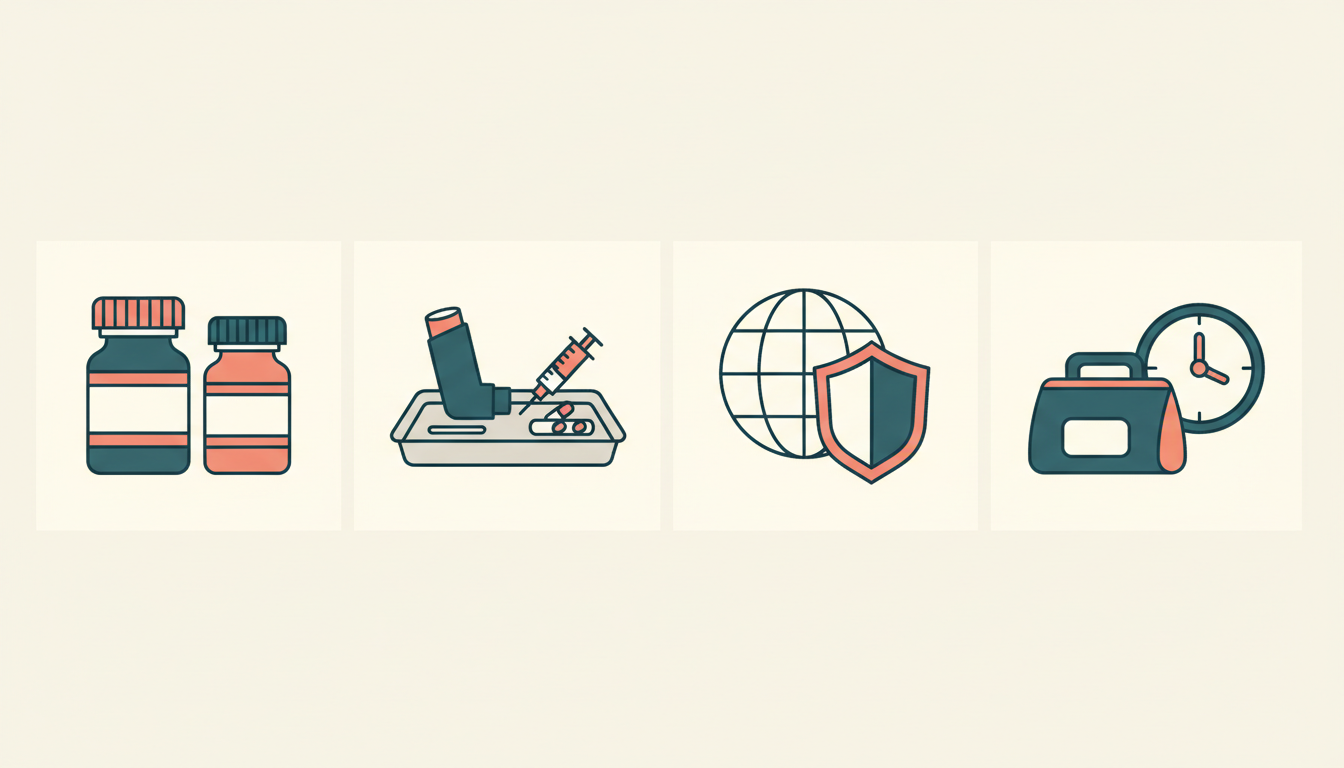
LABEL → SCREEN → VERIFY → STORE
Make each check before departure
7. A practical packing layout
- Small accessible bag: required daily medicines, legally needed supplies and basic documentation.
- Carry-on compartment: securely packed backup items and approved accessories, with liquid medicine easy to present for screening.
- Cooling pouch if required: the specific carrier and temperature protection recommended for that product.
- Secure offline note: generic and brand names, prescription contact and relevant assistance numbers.
- Backup plan: what to do if a flight is canceled, a checked bag does not arrive, or accommodation refrigeration fails.
Keeping essential medicine in carry-on luggage is often prudent, but the traveler must also consider permitted baggage limits, screening, device batteries and destination laws. In-flight equipment use may need airline approval. Do not put urgent health needs at risk because a packing checklist suggests moving medicine to inaccessible luggage.
8. Worked example: a fictional international flight
A traveler plans a twelve-day international trip with one stopover. They check whether all prescriptions are legal in the destination and transit context, speak with a pharmacist about timing and quantities, confirm proper temperature storage and keep original labels. One medication is liquid, so they plan to declare it for separate screening at the U.S. checkpoint. No health outcome or guaranteed security procedure is implied; this is a planning illustration.
The traveler also uses a breathing device during sleep. Instead of assuming airline electrical outlets are suitable, they review the airline’s cabin-device and battery rules before purchase. They record the equipment’s size and manufacturer information, follow the airline’s disability-service instructions as applicable, and keep support contact details available.
Before-you-fly medicine checklist
- □ Medication and essential device inventory prepared.
- □ Healthcare professional or pharmacist consulted on storage and timing as needed.
- □ Original labeled packaging and appropriate documents packed.
- □ TSA liquid and device screening procedures reviewed.
- □ Destination and transit-country medicine legality verified.
- □ Airline rules on device use, batteries and assistance confirmed.
- □ Temperature and refrigeration contingencies checked.
- □ Delay allowance, secure contact list and lawful refill options considered.
- □ Essential supplies accessible during transport.
Frequently asked questions
Can I take liquid prescription medicine through TSA security if it is more than 3.4 ounces?
Yes, medically necessary liquids may exceed the standard 3.4-ounce limit in reasonable quantities, subject to declaration and screening. Check TSA’s current procedures and be prepared for additional inspection.
Must every medication be in its original bottle on a domestic U.S. flight?
TSA does not universally require pills to remain in original prescription bottles for checkpoint screening, but other laws and provider requirements can apply. For international trips, the CDC recommends original labeled containers, and destination law may require them.
Can I assume my CPAP or other powered medical device will work on the airplane?
No. Confirm the airline’s medical-device use and battery rules, the equipment’s own instructions, and any required notification or approval before flying.
Official sources and editorial statement
- CDC — Traveling Abroad with Medicine
- TSA — Security Screening and Medications
- TSA Cares — Travelers with Disabilities and Medical Conditions
- U.S. State Department — International Travel Planning
Reviewed October 11, 2026. This is general independent travel-planning information, not medical advice. The images are illustrative and do not portray a patient’s actual medication or a real security procedure. Screening requirements, medication legality and airline device policies can change. Consult qualified professionals and official authorities for individual needs.

