
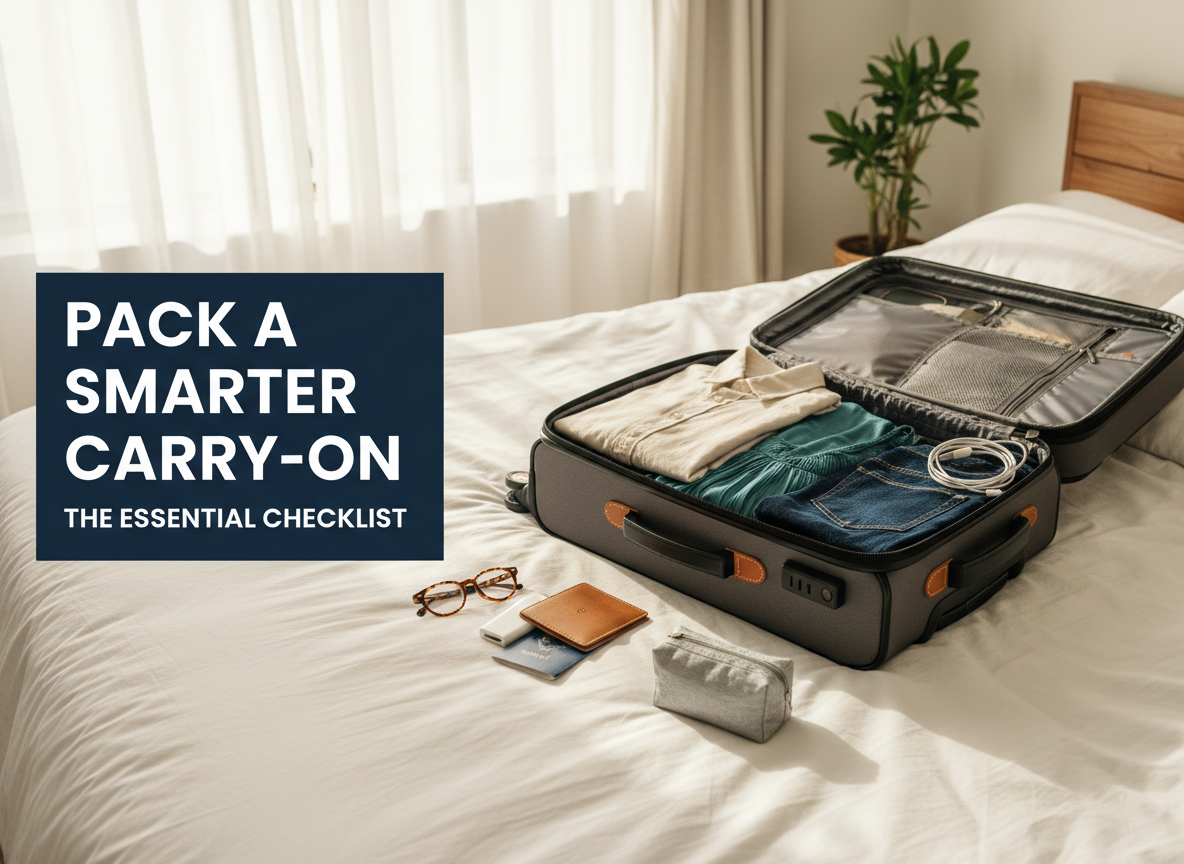
Carry-On Packing Essentials for Travelers Over 50
A practical packing guide with TSA and FAA essentials.
A smart carry-on is not about packing the smallest possible bag. It is about keeping the things you need organized, accessible and within the rules. For U.S. travelers over 50, comfort may be a priority—but every traveler can benefit from a clear system that minimizes digging through luggage at security or on a crowded flight.
Quick answer: Pack around four zones—documents, everyday comfort, toiletries and electronics. Keep essential medications and valuable items with you, verify the airline’s size allowance, and remember that the Transportation Security Administration (TSA) handles security screening while airlines set many cabin-baggage limits.
1. Check the airline’s carry-on allowance before packing
Carry-on size, weight, number of bags and fees vary by airline, fare type, route and aircraft. A case sold as ‘international carry-on’ is not guaranteed to fit every airline. Check your booking directly with the operating carrier, including whether a personal item is included and whether smaller aircraft have special limitations.
- Read the baggage allowance for your exact fare.
- Measure your suitcase including wheels, handles and outside pockets.
- Confirm whether your personal item fits beneath the seat and whether weight limits apply.
- If traveling on multiple airlines, check the most restrictive segment rather than assuming all flights have the same rules.
- Avoid packing your bag so tightly that you cannot remove required items for security screening.
2. Begin with documents and irreplaceable essentials
Put identification, tickets or booking confirmations, vital contacts and medications in the most accessible part of your personal bag. For U.S. domestic flights, check the current TSA list of accepted identification. For international trips, verify the destination’s passport validity and entry requirements before traveling.
- Valid identification for the route, plus passport when required.
- Boarding and reservation details saved on your phone; keep a backup accessible offline.
- Phone, glasses, necessary hearing or mobility accessories, and charging cable.
- Essential medicines and supplies, stored and carried in a way that meets applicable screening and destination rules.
- A simple emergency contact card and important accommodation contact details.
For personal medical needs, consult your clinician or pharmacist well ahead of a trip. This site does not advise on doses, storage of a particular medication or changing treatment schedules.
3. Use a four-zone packing system
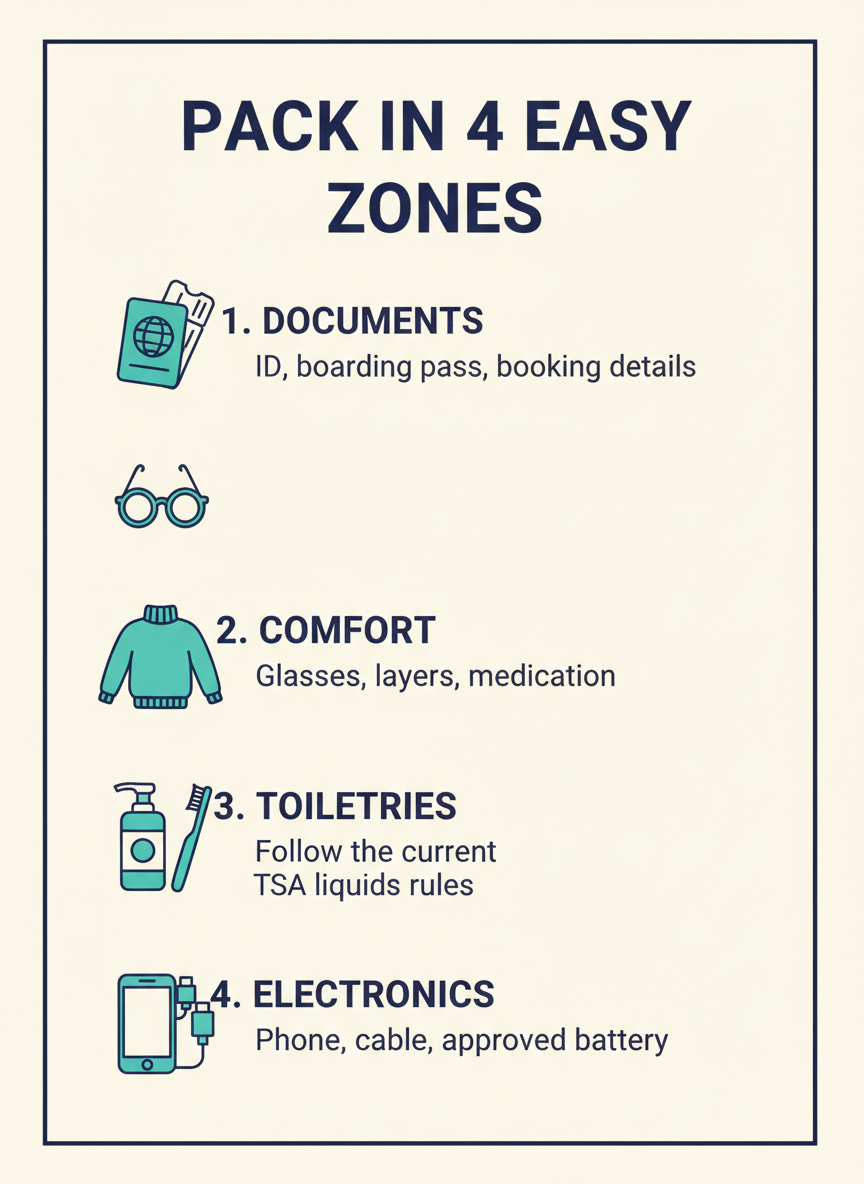
The four zones help you avoid unpacking everything at the checkpoint or in your seat. Use distinct pouches if you have them; zippered pockets or simple fabric bags work too. The point is a repeatable system—not buying extra organizers.
Zone A — Documents and daily essentials
Keep your identity documents, itinerary, a pen, reading glasses and other frequently used items in a small, easy-to-reach pocket. Leave passport numbers and other personal details out of visible external tags.
Zone B — Clothing and comfort
A lightweight layer, well-worn comfortable shoes, spare socks and a change of underclothing can be helpful on longer journeys. Pack clothing you know you will use, and adapt for weather and your trip rather than building a one-size-fits-all list.
Zone C — Liquids and toiletries
For typical U.S. airport security screening, TSA’s 3-1-1 guideline permits common carry-on liquids, aerosols, gels, creams and pastes in containers of 3.4 fluid ounces (100 milliliters) or less, placed together in one quart-sized bag per passenger. Larger ordinary liquid containers usually belong in checked luggage or should be left at home. Medically necessary liquids have separate treatment. Use TSA’s searchable ‘What Can I Bring?’ list for individual items.
Zone D — Electronics and chargers
Protect cables from tangles and place electronics so they can be taken out if security staff request it. Power banks and spare lithium batteries belong in carry-on baggage, not checked baggage. The Federal Aviation Administration (FAA) generally allows spare lithium-ion batteries up to 100 watt-hours; batteries over 100 up to 160 watt-hours need airline approval, with other restrictions. Airline limits can be stricter. Review the FAA passenger battery guidance.
4. Pack medicines and assistive devices carefully
TSA says medically necessary liquids may be allowed in reasonable quantities exceeding the standard 3.4-ounce limit and may undergo separate screening; they do not have to fit the standard quart bag. At the checkpoint, inform the officer and follow instructions for additional screening. Rules can differ outside the United States, especially at connecting airports.
Passengers with disabilities have protections under the U.S. Air Carrier Access Act and implementing rules. Necessary assistive devices generally do not count toward the airline’s carry-on baggage limit and must be handled under applicable safety rules. This can include certain mobility devices, CPAP machines or assistive medical supplies, but size and battery-related limitations may affect storage arrangements. If you need specific handling, contact your airline before travel. See DOT Airline Passengers with Disabilities Bill of Rights.
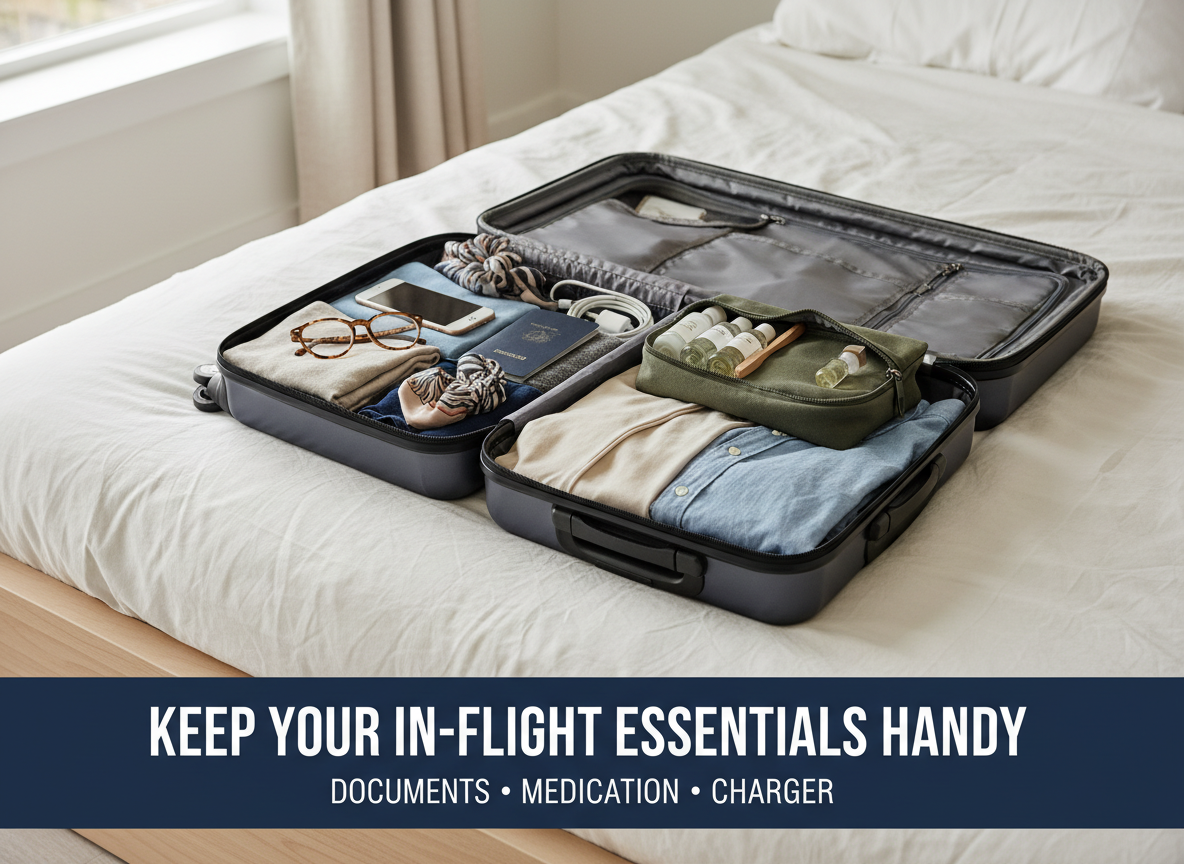
Separate items you will need in flight from items that can stay in the larger bag.
5. Make a personal-item pouch for your seat
If your bag will be in an overhead bin, keep your in-flight basics in a compact pouch that fits within your permitted personal item. Having what you need already accessible can help reduce repeated trips to the overhead bin.
- Phone and glasses.
- Any essentials you may need before landing.
- Water bottle to fill or purchase after security.
- Comfortable layers for changing cabin temperature.
- Small notepad or headphones, if you use them.
- Charging cable and a power bank packed in accordance with the carrier’s rules.
6. Do a realistic weight-and-access test at home
- Fill the bag as you would for departure; zip every pocket and expand nothing beyond the allowed dimensions.
- Lift or move it in the way you expect to handle it at the airport. If overhead lifting may be difficult, make arrangements appropriate to your needs rather than risking strain.
- Sit down and reach for the items you expect to need in flight. Repack if accessing them requires unloading the entire suitcase.
- Weigh and measure the actual packed case, then check the airline’s written allowance.
- Take a quick photo of the packed layout so it is easier to repack at the hotel.
Choose a suitcase that rolls smoothly and has practical handles. Specific luggage recommendations should be based on verified product features, not unsupported claims that one brand is best for all older travelers.
7. Common mistakes to avoid
- Assuming every airline permits the same carry-on dimensions.
- Checking a power bank or loose spare lithium battery instead of carrying it in the cabin.
- Treating liquid medicines exactly like ordinary shampoo and failing to check special screening rules.
- Packing the only copy of a vital document in checked luggage.
- Overfilling every pocket so TSA inspection becomes difficult.
- Putting essentials in an overhead bag instead of a reachable personal item.
- Buying packing accessories before deciding what really needs to travel.
A reusable carry-on checklist
| Area | Before you leave home |
|---|---|
| Travel identity | □ Correct ID or passport for itinerary |
| Reservations | □ Flight, hotel and ground transport details saved |
| Comfort | □ Spare layer, glasses, suitable shoes and essentials |
| Toiletries | □ Ordinary liquids meet the applicable checkpoint rule |
| Medication | □ Necessary medicines/supplies packed and special screening checked |
| Electronics | □ Phone, cable, power bank and FAA/airline battery limits checked |
| Baggage | □ Measurements, weight and fare allowance verified |
| Final check | □ Frequently used items can be reached without unpacking everything |
Frequently asked questions
Can I pack a power bank in a checked suitcase?
Spare lithium batteries, including many portable power banks, must travel in carry-on baggage. Check the FAA rating and your airline’s rules, especially for larger-capacity batteries.
Can I bring liquid medication larger than 3.4 ounces?
TSA permits medically necessary liquid medication above the ordinary size limit in reasonable quantities for a flight, subject to security screening. Tell the checkpoint officer about the medically necessary liquid and review TSA guidance. Foreign airport rules may differ.
Do assistive devices count toward the airline’s carry-on limit?
U.S. DOT rules generally exempt covered assistive devices used by travelers with disabilities from normal carry-on limits. They still must meet applicable safety requirements and some equipment may need special handling or storage.
Should I buy a larger bag or pack less?
Start by checking your airline’s limits and your own ability to handle the packed bag comfortably. A lighter, organized setup often matters more than the number of compartments or premium suitcase branding.
The bottom line
Carry-on packing becomes simpler when every item has a role and a place. Put critical documents and medicines first, build a compact comfort kit, separate ordinary toiletries from exempt medical liquids, and keep spare lithium batteries in the appropriate cabin bag. Use the official sources below for requirements that can change.
Official resources and verification
- TSA — What Can I Bring? for security screening of individual items and the 3-1-1 liquid rule.
- TSA — Travel Tips for medication screening guidance.
- FAA — Airline Passengers and Batteries for power banks and spare battery limits.
- U.S. DOT — Air Travelers with Disabilities Bill of Rights for assistive device and passenger accommodation rules.
Fact-check date: October 9, 2026. TSA, FAA, airline and destination rules may change. Confirm current guidance and your individual flight requirements before departure.
Editorial note: This educational article is not medical, legal or personalized travel advice. It does not recommend a product or guarantee airport acceptance of any item.
Related travel guides
- Organize Travel Documents — a practical guide for the next stage of planning.
- Compare Flights with Confidence — a practical guide for the next stage of planning.
- Request Airport Assistance — a practical guide for the next stage of planning.
Need a different topic? Browse all travel guides or start with our five-step overview.

