

How to Plan a Relaxed Three-Day Weekend Getaway After 50
A comfortable weekend plan with a clear itinerary and budget.
A short trip can feel like a real vacation without a long flight, complicated packing or a fully booked schedule. A three-day weekend is a useful format: one day to arrive, one full day to explore, and one day to return home. The key is to choose a destination that fits your interests and use a slower, realistic plan. This guide is for U.S. travelers over 50 and anyone who values comfort over rushing.
Quick answer: Pick a location within a comfortable travel range, choose one lodging base for two nights, plan one main activity for the full day, check opening hours and reservations through official websites, and leave time for weather, meals and rest. Use the example itinerary and costs below as a template—not as a promise that every destination has these prices.
1. Choose a destination that fits your weekend
Instead of searching every U.S. destination, choose a manageable travel radius first. Consider a small city, scenic town, lakeside community, national park gateway or cultural district that has restaurants and attractions you actually want to visit.
- Driving: compare the complete drive, not just a straight-line distance. Include safe rest stops and likely traffic.
- Flying: include airport transfers, security time and arrival-to-hotel transportation; a very short flight can still take much of the day.
- Rail: look at station access, luggage handling and the final trip to the hotel.
- Season: check the National Weather Service for the dates and route rather than relying only on a destination’s average weather.
- Priorities: decide whether your ideal weekend means quiet scenery, museums, food, easy walks or time with family.
For U.S. weather forecasts and hazardous conditions, use the National Weather Service forecast portal. Forecast uncertainty increases further into the future, so recheck closer to departure.
2. Select one convenient home base
Changing hotels during a two-night stay can add packing, check-out, baggage storage and travel time. One accommodation near your planned activities can simplify the weekend. Compare final stay costs, not just advertised nightly rates, and verify what the room actually includes.
- Consider whether a quiet location, elevator, walk-in shower, nearby parking or step-free access matters to your party.
- Measure realistic routes between the lodging, transportation terminal and main destination.
- Check check-in, check-out and luggage storage policies.
- Look at recent reviews for recurring functional issues, not simply the overall star score.
- Understand the cancellation deadline and total booking price before paying.
3. Build a three-day sample itinerary
This example is deliberately flexible. The exact times are optional, not fixed reservations. Swap an indoor attraction for an outdoor one as weather and interests change.
| Day | Main idea | Comfort-first approach |
|---|---|---|
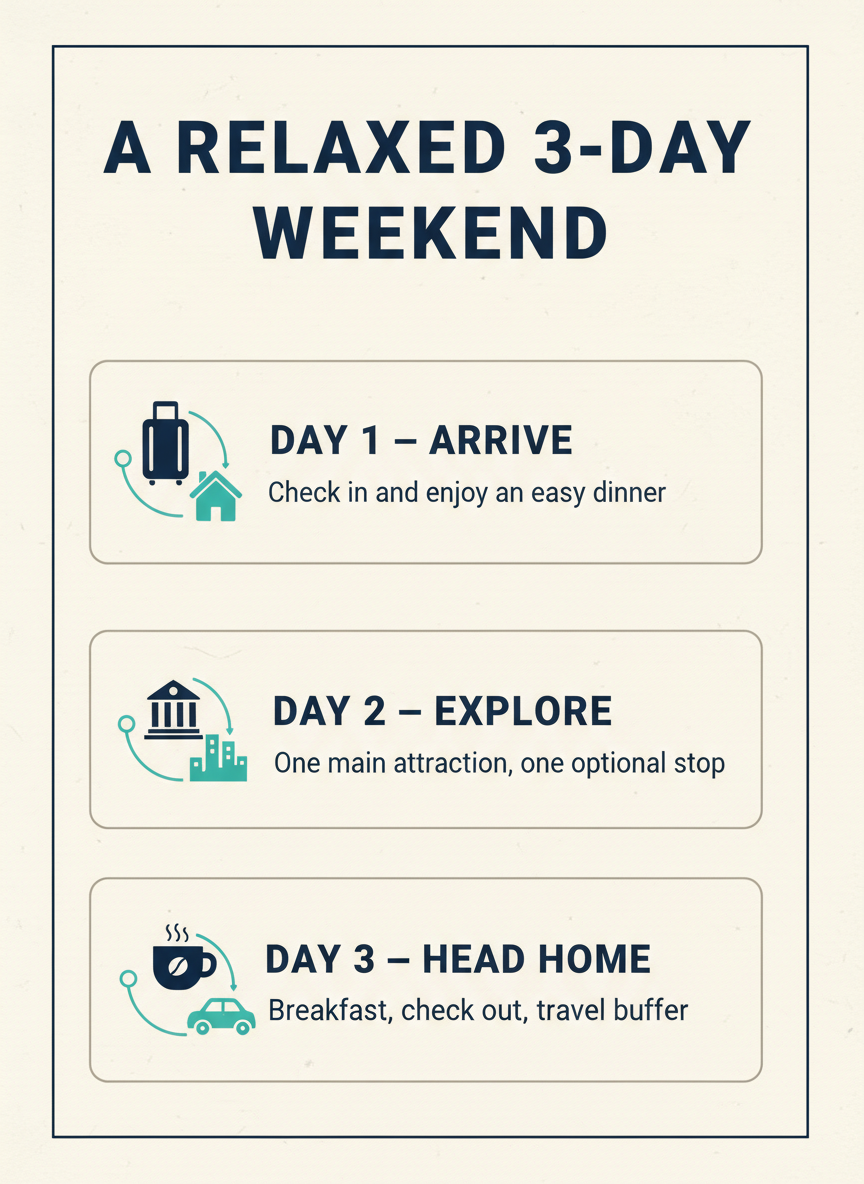
| Day 1 — Arrive | Travel, hotel check-in, nearby dinner | No major activity booked for a tired arrival |
| Day 2 — Explore | One museum, park or walking district | One booked priority; optional second stop |
| Day 3 — Return | Breakfast, short local visit if time allows | Check out with a generous travel buffer |
Day 1: arrive and settle in
Leave at a time that helps you avoid unnecessary rushing. Keep the afternoon simple: check in, orient yourself to the area and choose a convenient place for dinner. If the room is not ready, ask what luggage options are available. Avoid purchasing nonrefundable event tickets for the arrival evening unless your transportation and timing are reliable.
Day 2: choose one memorable experience
Plan one activity that genuinely interests your group. That might be a major art museum, a scenic garden, a short guided tour, a historic district or an accessible trail. Add lunch and flexible time around it. A second stop is optional.
If visiting a National Park Service site, check the specific site’s official operating hours, current alerts, accessibility details, entrance fees and reservation or timed-entry requirements. The NPS Plan Your Visit guidance reminds visitors that some activities and locations require advance planning and that conditions may change. A public park is not necessarily accessible year-round.
Day 3: make departure feel unhurried
Enjoy a relaxed breakfast, pack, verify your route and leave with a margin for traffic or transportation delays. If you have time for an optional coffee stop, choose one close to your route home instead of starting an entirely new cross-town journey.

A single comfortable hotel base and a simple plan can make a short stay feel easier.
4. Use a sensible budget for two travelers
The following is a fictional two-night weekend budget example for two U.S. travelers. Costs differ widely by city, dates, accommodation type, transport mode and personal choices. These numbers are provided solely to show the math.
| Category | Illustrative total |
|---|---|
| Round-trip transportation | $200 |
| Hotel, two nights | $360 |
| Lodging taxes and fees not yet included above | $50 |
| Meals for three days | $180 |
| Admission or experience | $60 |
| Local rides and parking | $50 |
| Contingency | $100 |
| Total weekend budget | $1,000 |
If your actual stay includes taxes in the confirmed hotel price, do not add them a second time. Similarly, a deposit that is credited toward the final bill is normally part of the lodging cost, not a new separate charge. Keep optional shopping outside the essential trip estimate unless you intend to budget for it.
5. A four-question destination comparison
Before booking, shortlist two weekend destinations and answer four questions for each. The winner is not necessarily the one with the most famous attractions.
| Question | Destination A | Destination B |
|---|---|---|
| Will travel leave us with meaningful time to enjoy the place? | Yes / No | Yes / No |
| Can we find a comfortable lodging option within budget? | Yes / No | Yes / No |
| Is there one must-see experience we can actually visit? | Yes / No | Yes / No |
| Is there a reasonable weather and cancellation backup? | Yes / No | Yes / No |
If one answer is No, reconsider the plan or research another option. This simple filter can reduce the urge to keep comparing dozens of destinations.
6. Check what actually needs a reservation
Short getaways are easier when reservations match the level of certainty you have. Book essentials you truly need—transportation, lodging and a high-priority attraction that sells timed tickets—rather than paying in advance for every meal and activity.
- Confirm ticketing, operating hours and access conditions on the venue’s official website.
- Read cancellation and rain policies before buying.
- Note any events that create unusually heavy crowds or higher lodging rates.
- If accessibility is required, verify the actual details with the venue rather than assuming a marketing description is sufficient.
- Save confirmation information offline and keep direct contact details available.
7. Pack for three days without overpacking
A two-night weekend usually does not require the same luggage as a long overseas vacation. Adapt to expected weather, any dress requirements, and the type of activities you plan.
- Travel documents or accepted identification required for your route.
- Comfortable clothing and footwear you have already used.
- One additional layer for temperature changes.
- Medication and personal assistive items according to your needs.
- Phone charger, reservation confirmations and emergency contacts.
- Weather-appropriate outerwear, sunscreen or other items as necessary.
For a more detailed luggage system, read our Carry-On Packing Essentials for Travelers Over 50 guide.
A visual three-day reminder
8. Create a bad-weather backup
Good weekend planning includes a Plan B. If weather makes an outdoor trail or walking district unpleasant or unsafe, have one indoor alternative that does not require complicated transportation. Monitor official weather alerts and never assume a scheduled activity is safe because your reservation still appears active.
If storms, wildfire smoke, flooding or heat hazards affect your route, adjust the plan rather than following an itinerary at any cost. The National Weather Service safety information provides hazard-specific guidance.
9. Before-you-go checklist
- □ Destination and travel mode fit our available time.
- □ Hotel total price and cancellation conditions confirmed.
- □ Main attraction hours, fees, access and reservations verified.
- □ Transportation and local arrival route checked.
- □ Necessary documents and confirmations safely stored.
- □ Weather and road or transit conditions reviewed.
- □ Basic packing and emergency items ready.
- □ One flexible backup activity available.
- □ Return journey has enough time to avoid rushing.
Frequently asked questions
How many attractions should I plan for a three-day weekend?
For many travelers, one priority on the full day and a couple of optional stops provide enough variety. Adapt the plan to your interests, mobility, weather and energy. There is no universal attraction quota.
Is a small town better than a big city for travelers over 50?
Not necessarily. A compact city neighborhood can be as convenient as a small town, and a rural destination may involve long drives. Compare your specific lodging, distances and transport needs, not the destination’s size alone.
Should I book all restaurants ahead of time?
Only when a particular reservation is important or availability is limited. Leaving some meals flexible can reduce the pressure to arrive at a specific time.
What if the weather changes after I’ve booked?
Review refund or rescheduling rules, use official weather alerts and keep an indoor alternative. Weather-dependent activities may have specific cancellation policies, so never assume every ticket is refundable.
Sources and review date
- National Park Service — Plan Your Visit (park operating information, alerts, accessibility and reservations).
- National Weather Service — Forecasts (local weather forecasts).
- National Weather Service — Safety (weather hazard information).
Editorial review: October 9, 2026. This is a general U.S.-oriented planning guide, not a recommendation of a specific business or a quote for actual travel services. Verify all booking terms, availability, opening times and weather before travel.
Independent content: We have not claimed to have personally visited a fictional destination. No tour operator, hotel or travel provider sponsored this article.
Related travel guides
- Build a Realistic Vacation Budget — a useful companion guide.
- Choose a Comfortable Hotel — a useful companion guide.
- Comfortable Road Trip Planning — a useful companion guide.
Explore all travel guides or follow our five-step starting plan.

