
How to Plan a Comfortable Road Trip After 50
Prepare your route, vehicle and rest stops for a comfortable trip.
A good road trip does not have to cover hundreds of miles every day. The best itinerary is one that fits the travelers, vehicle, weather, driving conditions and places worth stopping for. Whether you are visiting family, taking a scenic weekend away or driving to a national park, a little preparation can make the trip safer and easier to enjoy.
Quick plan: Set a comfortable daily driving goal; choose a few reliable breaks; inspect your vehicle and check safety recalls; pack an emergency kit; and review weather and state road conditions before setting off. Every suggestion should fit your abilities and circumstances—age alone does not determine how long someone can comfortably drive.
1. Plan the driving day around your energy, not the map
A mapping app can estimate road travel time, but its route estimate may not include the stops you will want for meals, restrooms, sightseeing or changes in conditions. Decide how much actual driving you want in a day, leaving margin for traffic and delays.
- Choose the destination and the number of days available.
- Pick your preferred route and identify sensible overnight stops, if necessary.
- Mark a few places to rest, eat, use restrooms or stretch comfortably.
- Allow time for construction, weather changes and arrival logistics.
- Share the broad route and expected arrival with someone you trust.
If you become drowsy or unable to concentrate, stop driving in a safe place and rest or change drivers. A scheduled break is not a substitute for acting on fatigue. The National Highway Traffic Safety Administration (NHTSA) emphasizes staying alert, taking time to rest and avoiding distracted or impaired driving. See NHTSA’s road-trip safety guidance.
2. Build a sample day that leaves room to relax
Here is an illustrative route plan for a 330-mile road trip with two travelers. Times and distances are examples only; they are not an estimate for any particular route. Change the breaks and overnight stop to suit local roads and personal needs.
| Trip stage | Illustrative distance | Planning decision |
|---|---|---|
| Morning departure | 0 miles | Check weather, navigation, vehicle condition |
| First driving segment | 110 miles | Stop safely for restroom, drinks and a break |
| Middle driving segment | 110 miles | Consider lunch and a longer rest |
| Final driving segment | 110 miles | Arrive with enough time for hotel check-in |
| Total | 330 miles | Add stop time to the route estimate |
For some people that example will be too long, and for others it may be reasonable. Driving needs vary substantially by route, weather, health, traffic, and comfort. Break up a long trip into more days if it improves safety or enjoyment. No fixed mileage target is a requirement.
3. Check the vehicle before departure
NHTSA advises road-trip travelers to check tires, fluids, lighting, wiper blades, cooling systems and other safety-critical vehicle components, and to address recalls. If you are not comfortable checking these items, arrange a qualified mechanic’s inspection before a lengthy trip.
- Tires: Check pressure when tires are cold; NHTSA describes cold as at least three hours after driving. Use the manufacturer-recommended pressure printed on the driver’s door-jamb placard or in the owner’s manual—not the maximum pressure molded into the tire sidewall. Inspect tread and visible damage, including any spare tire.
- Lighting: Confirm that headlights, brake lights, turn signals and hazard lights work.
- Wipers and fluid: Replace worn blades and check washer fluid and applicable vehicle fluid levels.
- Cooling, belts and hoses: Have a mechanic inspect any concerning cracks, leaks, noises or fluid issues before departure.
- Battery and charging: Check battery condition and know how to obtain roadside help.
- Recalls: Search your car’s vehicle identification number at NHTSA’s free recall lookup and arrange applicable repairs.
Electric vehicles require their own trip planning. Check charging locations, station compatibility, operating hours and backup charging options; allow for changes in range with weather, driving conditions and vehicle load. Do not assume a public charger is available just because it appears on a map.
4. Prepare a practical roadside kit
Even a well-maintained vehicle can have a breakdown. Carry items suited to your route and weather, and keep them somewhere accessible. NHTSA recommends basic roadside emergency supplies such as a phone and charger, first aid kit, flashlight, water, food, maps, warning equipment, and appropriate vehicle tools.
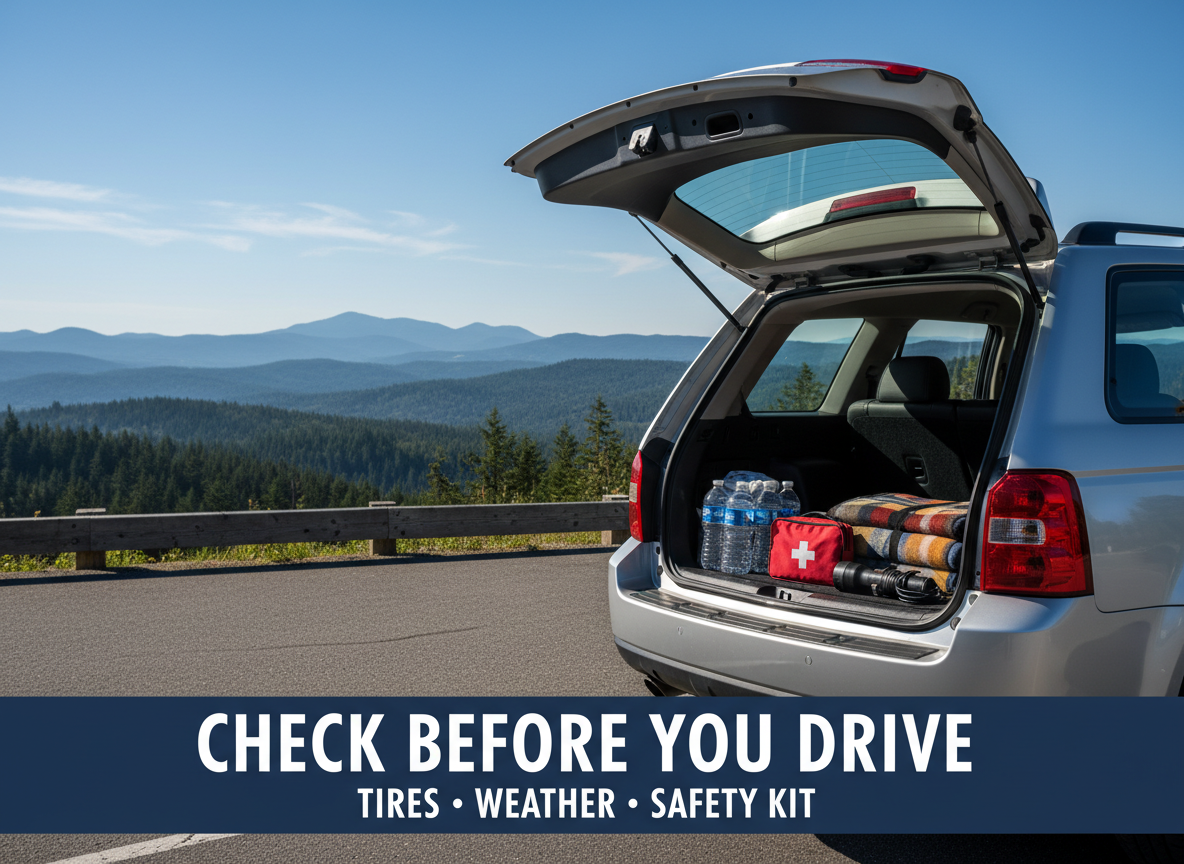
A simple roadside kit is more useful when supplies are organized and easy to reach.
- Fully charged phone and vehicle-compatible charger.
- First-aid kit and any personal essentials.
- Flashlight with usable batteries and appropriate safety warning supplies.
- Drinking water, shelf-stable snacks and blankets or extra layers for the season.
- A paper map or stored offline navigation as a backup.
- Tire pressure gauge, roadside assistance information and basic tools appropriate to your vehicle.
- Emergency contact information in a safe, accessible location.
Never attempt a roadside repair in an unsafe traffic location. Move to safety if possible, turn on hazards as appropriate, and contact emergency services or roadside assistance when necessary.
5. Recheck weather and road conditions
Check the weather forecast for your entire route, not only the destination. Mountain passes, high plains and coastal roads can have very different conditions from the starting point. The National Weather Service (NWS) provides forecast and hazard information, while state transportation agencies provide current road restrictions and closures.
The National Weather Service travel decision-support map helps travelers assess predicted highway weather hazards, and advises checking state Department of Transportation/511 sources for current road conditions. This NWS map is identified as a prototype under development and should not be relied on for operational driving decisions. Use official state Department of Transportation/511 services for current road conditions, closures and restrictions before and during travel. An NWS forecast is a planning resource, not a guarantee that roads are passable. Follow road closures and official directions.
- Check alerts for heavy rain, snow, wind, ice, extreme heat or wildfire conditions that may affect the route.
- Avoid driving across a flooded roadway, even if the water appears shallow.
- If hazardous conditions develop, change the departure, reduce the distance or stay overnight in a safe place.
- Do not handle weather or route apps while operating the vehicle. Let a passenger check information, or pull over safely first.
6. Choose stops that work for your travel party
Consider restroom accessibility, safe parking, seating, food options, and the time needed to move between the parking area and facilities. A scenic stop is only useful if it fits the group and the time available. If you need a particular accessible feature, verify it with the venue or travel center rather than assuming every roadside stop offers the same facilities.
Many travelers enjoy a little flexibility: one planned main attraction and a few optional stops often leaves more room for the unexpected than a tightly packed schedule.
7. Keep road-trip costs predictable
Vehicle trips may appear inexpensive at first, but fuel or charging, parking, tolls, meals, hotels and attraction admissions all add up. Write a simple trip cost outline, then allow a contingency for delays or changes to the plan. For a more detailed budgeting worksheet, read our How to Build a Realistic Vacation Budget After 50 guide.
| Expense | Planning question |
|---|---|
| Fuel or charging | What will this route require, including backup options? |
| Tolls and parking | Are there route or destination fees? |
| Lodging | What is the full checkout total, including taxes? |
| Meals and activities | What do we actually plan to do each day? |
| Unplanned expenses | What cushion can we comfortably keep available? |
Three-stage checklist to use on your phone
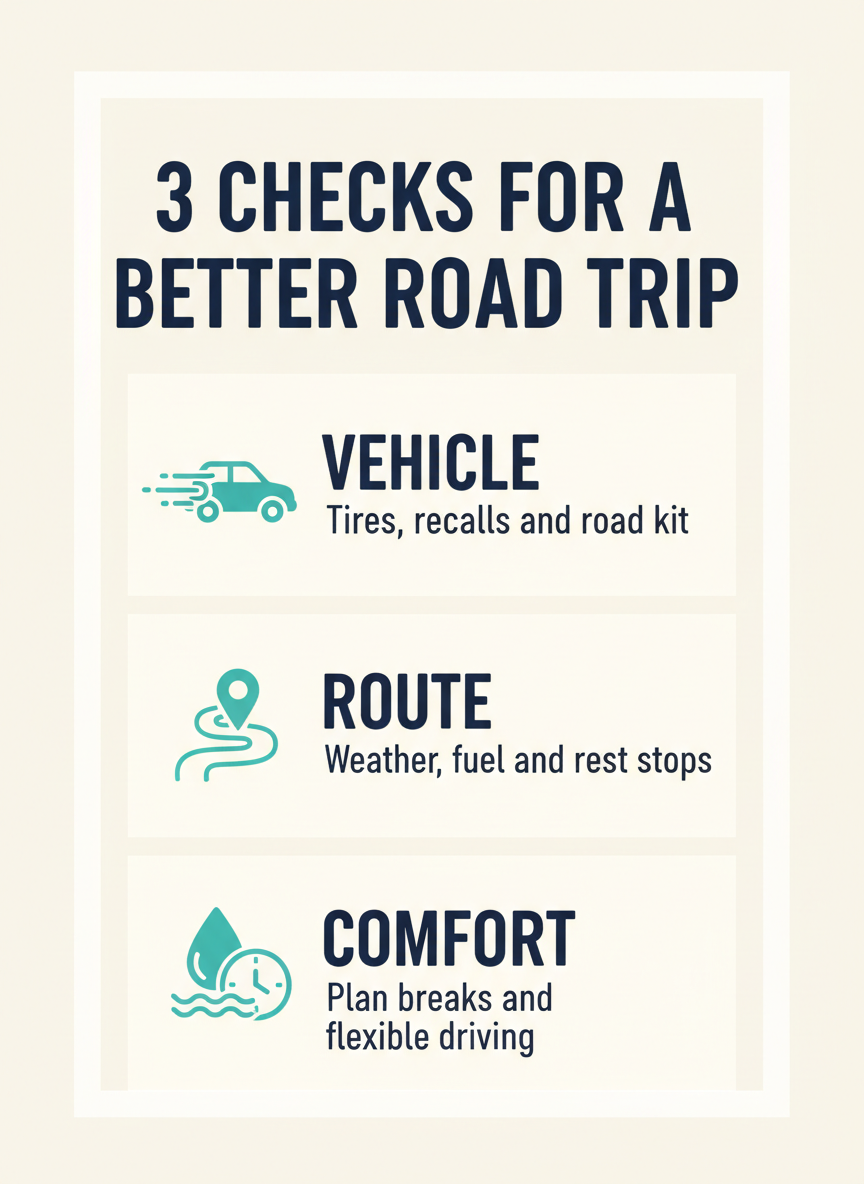
8. The night-before departure checklist
- □ Check weather warnings and current roadway closures.
- □ Confirm hotel bookings and overnight stops, if any.
- □ Check cold tire pressure, lights, fuel or charge and other important vehicle systems.
- □ Put identification, reservation details and needed personal items where they can be reached.
- □ Charge phones and download backup maps.
- □ Place the roadside kit in an accessible part of the vehicle.
- □ Tell someone your route and expected arrival.
- □ Leave enough time that you do not feel pressured to speed.
Frequently asked questions
How many hours should someone over 50 drive in one day?
There is no universal safe limit based solely on age. Set a conservative schedule based on fatigue, experience, weather, road complexity and medical or accessibility needs. Stop and rest if you feel tired or distracted.
Should I check the tire pressure shown on the tire sidewall?
No. The number on the tire sidewall is not your car’s recommended inflation pressure. Follow the vehicle manufacturer’s placard on the driver’s door frame or the owner’s manual and check pressure when tires are cold.
Can I trust my navigation app for bad-weather road access?
Do not treat it as the only source. Consult NWS warnings and the applicable state DOT/511 service, and obey road closures and law-enforcement instructions.
Is a roadside kit necessary for a short trip?
A basic kit can be useful even for short journeys. Adjust the contents based on distance, weather, terrain and the assistance available along the route.
Official sources and editorial review
- National Highway Traffic Safety Administration — Summer Driving and Road Trip Tips (tires, safety recalls, vehicle inspections, emergency kits and driving behavior).
- NHTSA — Safety Recall Lookup (free vehicle recall checking).
- National Weather Service — Transportation Decision Support (prototype weather-hazard forecast map for planning only; do not use it as the sole basis for operational driving decisions; verify current closures, restrictions and road conditions with state DOT/511).
Last checked: October 9, 2026. This is research-based trip planning information, not driving instruction, professional vehicle service advice or personalized medical guidance. Road conditions and official travel information can change. Review current sources before each departure.
Editorial disclosure: No vehicle, hotel, insurance product or roadside assistance provider sponsored this guide. The route example is fictional and does not represent a real trip or first-hand driving experience.
Related travel guides
- Build a Realistic Vacation Budget — a useful companion guide.
- Relaxed Three-Day Getaway — a useful companion guide.
- Complete Travel Planning Checklist — a useful companion guide.
- Plan a National Park Trip After 50 — compare passes, accessible viewpoints and park conditions.
Explore all travel guides or follow our five-step starting plan.

