

PLAN A THREE-GENERATION VACATION
More family time • Fewer scheduling surprises
Quick answer: Choose one shared purpose, agree on budgets and responsibilities in advance, select lodging and transportation that work for the entire group, and keep part of every day optional. A three-generation trip succeeds when grandparents, parents and children have space to enjoy the vacation in different ways—not when everyone follows the same packed schedule.
A family trip that includes grandparents, adult children and younger children can be rewarding, but different sleep schedules, activity preferences, expenses and routines make it unusually easy to overplan. This guide is for U.S. families with an adult over 50, not only retirees. It provides reusable decision tools rather than claiming one destination is ideal for every family.
1. Agree on what the vacation is for before choosing a hotel
Ask the group to name the experience they most want: time together, a family reunion, a beach, nature, a city museum, or a milestone celebration. Then ask what each person wants to avoid, such as long drives, early starts or expensive nonrefundable tours. Different answers are normal; the schedule should reflect them.
- Each household names one top priority and one activity it would happily skip.
- Choose a likely travel period after checking school, work and family commitments.
- Set a rough trip length and preferred travel-day maximum.
- Decide who will coordinate major bookings and how decisions will be documented.
- Agree that anyone may choose a quiet morning without being treated as uncooperative.
2. Set up a transparent family money plan
A vague agreement to “split everything evenly” can feel unfair when adults have different lodging preferences, party sizes and activity budgets. Decide separately how the group will pay for lodging, transportation, shared meals and optional attractions. Confirm who pays deposits up front, what happens if one household cancels and how refunds will be handled.
Use an actual quote for the intended dates rather than an advertised starting price. Read the final total including taxes, mandatory fees, extra guests, parking and deposits. Our realistic vacation budget guide offers a calculation framework. Do not assume a refundable security hold is an additional trip cost, but account for temporary cash or credit availability.
3. Choose lodging according to real needs, not photographs
An attractive home rental may have steep external steps, bedrooms on different floors, limited bathrooms, unprotected pools, narrow parking or a long walk to shops. A large hotel may offer more independent space, accessible rooms or housekeeping, but could separate the family across floors. Ask about actual room arrangements, sleeping capacity, kitchens, lifts and entry access before placing a deposit.
- Confirm the number and location of bedrooms, toilets and showers for the whole group.
- Ask about steps, surfaces, handrails, elevators and parking if relevant.
- Review child-safe spaces and supervision requirements when younger children are present.
- Check quiet sleeping space for anyone needing rest, including adults and children.
- Verify cancellation terms and whether the property permits the intended number of guests.

CHOOSE TOGETHER, NOT IDENTICALLY
One shared event plus optional activities works well
4. Balance one shared moment with separate options
Try a simple rhythm: one group meal or short sightseeing activity, followed by a choice between an active outing and a slower option. This is not an instruction to segregate people by age. A grandparent might be the most energetic hiker, while a child may need a nap. Ask what each person actually wants rather than assigning a stereotype to their age.
- Pick one low-pressure group activity that can be reached without an exhausting journey.
- Offer an optional higher-energy alternative for those who want it.
- Schedule a realistic meal and free-time window.
- Set a simple meeting place and time rather than requiring constant group tracking.
- Leave the evening flexible for rest, games or informal conversation.
5. Make transport transfers comfortable for everyone
A vehicle large enough for seven people may have little luggage room. If renting cars, check the seating configuration, required child restraints, driver permissions, tolls, fuel and pick-up conditions. With multiple vehicles, agree where the group will meet and make sure each driver has the correct destination, not only a picture from social media.
If using flights, do not assume every household can obtain the same seats, baggage allowance or change policy. Save each confirmation and arrange a meeting point after baggage claim. If someone needs disability-related assistance, use the carrier’s official process rather than relying on an unverified seller’s promise.
6. Child travelers and international documents need separate verification
Children traveling internationally may have passport, entry, vaccination or documentation requirements that differ from those of adults. A grandparent traveling with a minor should check the destination rules, carrier requirements and any appropriate parental-consent documentation; there is no one consent form universally accepted by every country or airline. Verify with the relevant authority rather than assuming a family relationship automatically establishes a right to travel.
The CDC provides Traveling with Children guidance and recommends discussing destination-specific needs with a child’s clinician or travel-health professional before travel. This article does not provide individual medical or vaccination advice. Use the actual itinerary and current health recommendations.
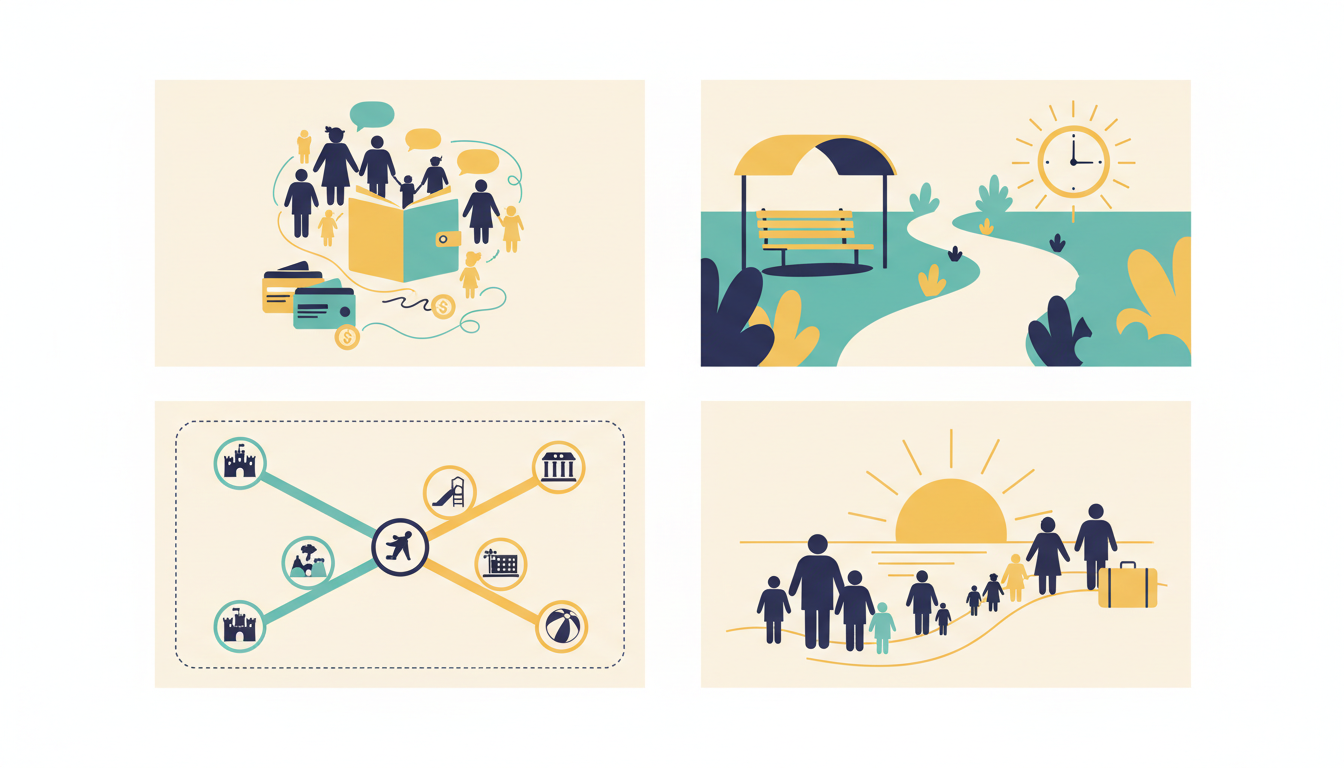
FAMILY → BUDGET → PACE → BACKUP
Agree first, book later, keep choices open
7. A fictional three-day multigenerational plan
Day 1 — Arrive and settle. Each household travels to the shared destination at a manageable time, checks in and has an easy common meal. Skip a late-night must-do attraction. Everyone confirms tomorrow’s meeting point and can choose a separate bedtime.
Day 2 — Shared experience with options. Have a family breakfast or scenic viewpoint visit. One group may choose a museum while others rest or explore a nearby garden. Meet for dinner only if the whole group genuinely wants to. A choice-based day often creates better memories than a tightly timed schedule.
Day 3 — Depart with room for delays. Confirm check-out, luggage transport and the actual location of rental car returns or airport terminals. Keep a backup plan if a child needs extra time or a vehicle is delayed. These are fictional examples, not claims about a particular resort.
8. Prevent common misunderstandings before the trip
- Who approves the final lodging choice and sends confirmation details?
- Who is responsible for paying shared deposits and tracking refunds?
- Which activities are genuinely required, and which are optional?
- Who will supervise children during an activity, and when does responsibility change?
- How will the group communicate if vehicles or flights arrive separately?
- What is the agreed fallback if a reservation or weather-dependent outing is cancelled?
Write the important agreements in a short shared note without adding unnecessary personal identity information. A simple plan helps families avoid repeated negotiations at every meal. Keep credit card details, passport numbers and private health documents out of broadly shared chat threads.
9. The family vacation booking checklist
- □ Shared purpose and individual preferences discussed.
- □ Per-household budget and deposit responsibilities confirmed.
- □ Accommodation capacity, stairs, bathrooms and cancellation terms verified.
- □ Transport, child seats and luggage capacity checked.
- □ One flexible group activity per day planned.
- □ Weather and quiet-time alternatives available.
- □ Children’s travel rules confirmed with relevant authorities if applicable.
- □ Emergency contacts and check-in procedures agreed.
- □ Final costs, booking numbers and policy documents stored securely.
Frequently asked questions
Should grandparents pay for the whole family vacation?
There is no universal rule. Families should agree on a budget and contribution plan openly and before booking. The important standard is clarity, not a particular distribution of costs.
Is it better for everyone to stay in one house?
Sometimes, but not always. Compare stairs, bedrooms, privacy, available bathrooms, cleaning expectations and the terms of the actual booking with alternatives such as hotel rooms or adjacent apartments.
Do children need exactly the same travel documents as adults?
No. Requirements may differ by age, nationality, destination, travel arrangements and accompanying adults. Verify children’s passports, airline requirements and any consent issues directly with current official sources.
Official references and editorial disclosure
- CDC — Traveling with Children
- CDC Yellow Book — Family Travel
- State Department — International Travel Checklist
- FTC — Avoid Travel Scams
Reviewed October 11, 2026. This guide is independent, research-based planning information. The sample itinerary and photographs are illustrative and do not document an actual family stay. Check child safety, legal requirements, property accessibility and current booking terms for your specific plans.

