

COMFORTABLE CITY TRAVEL AFTER 50
Museums • Transit • Rest breaks • Easier routes
Quick answer: Build your city sightseeing around one main attraction per day, compare the actual walking distance and transit access, and confirm restrooms, seating and accessible entrances before you buy tickets. A comfortable trip can include museums, restaurants and neighborhood scenery without trying to cover an entire city on foot.
The best urban visit is not necessarily a competition to complete the greatest number of attractions. Some travelers enjoy long walking days; others want a combination of short routes, scenic transportation and planned pauses. Neither preference is tied automatically to age. This guide gives U.S. travelers over 50 a practical way to design a comfortable city break while respecting individual needs.
1. Pick an area, not a list of distant landmarks
Before selecting a hotel, mark the actual locations of your main sightseeing priorities. A famous museum, market and waterfront may appear close together on a tourist map while being several transit rides apart. Check the actual walking route, public transit transfers and the station or stop closest to each entrance.
- Choose one main attraction and no more than one optional attraction for a day.
- Find the entrance used by visitors; the street address may lead to a service door.
- Check the route for steep grades, stairs, pavement, street crossings and construction.
- Locate a convenient meal or rest stop along the path.
- Save a return route that does not depend on completing the entire original walk.
2. Ask specific questions about museum and attraction access
Do not rely solely on a listing that says “accessible.” Check which entrance, lift, gallery, restroom, audio assistance, mobility aid policies and seating areas are available for your visit. Large museums can have long distances between exhibits even when access standards apply. Some attractions offer wheelchairs or folding stools but have different availability and borrowing rules.
The U.S. Department of Justice explains that museums and other places of public accommodation are covered by ADA requirements in many circumstances. This general legal framework does not substitute for verifying the specific facility, its current construction closures or the particular accommodation you need. See ADA.gov — Businesses Open to the Public.
3. Evaluate public transportation for the specific journey
Accessible transport systems, station elevators and boarding procedures vary by city and route. A route planner may propose a station that currently has an elevator outage or a long pedestrian transfer. Look at the local transit agency’s live service alerts and detailed station features. If a line is difficult to use, compare an authorized bus, accessible taxi or another transit alternative without assuming a particular service is guaranteed.
The U.S. Federal Transit Administration publishes ADA transportation service regulations. Those rules inform the obligations of covered public transportation operators, but do not mean each current vehicle or station has the exact features a traveler might prefer. Verify the actual trip.
PLAN YOUR REST STOPS
Entrance • Seating • Restrooms • Return transport
4. Check how you will actually get from stop to stop
The shortest route on a mobile map is not always the most comfortable or accessible. A quiet street may have uneven pavement, steep curbs or limited shade. A slightly longer route with crossings, benches and clear signage could fit better. Consider local topography, hot weather, precipitation and the amount of standing required in queues.
- Confirm the entrance closest to the public transit stop, not just the center of the property.
- Check whether a building’s accessible entry is separate from the main stairs.
- Identify restrooms and places to sit within and between attractions.
- Compare an alternate route or transport stop if the direct walking path is inconvenient.
- Save an offline map or short written address for the next stop.
5. Buy tickets only after checking the real visit conditions
Some attractions use timed entry or require reservations. Others have free entry with paid special exhibitions, guided visits or separate transport to a site. Before paying, check the exact date, entry window, cancellation rules, visitor accessibility information and the location of ticket scanning.
The phrase “senior discount” can mean different ages and eligibility requirements at different museums or transit agencies. Being over 50 does not automatically provide a fare reduction. Confirm each provider’s current policies and bring the required proof only when applicable. Avoid assuming an old travel forum comment gives a reliable current price.
6. Use one anchor activity and one flexible extra
A practical museum day might begin with a calm breakfast, a primary exhibit visit and an unhurried lunch. The second activity should be optional: a nearby garden, library, food market or scenic tram. If travel delays or heat make the afternoon uncomfortable, head back or switch to a closer indoor activity.
- Morning: arrive when the chosen attraction is open and queues are reasonable.
- Midday: plan a place to sit and eat, with a restroom nearby.
- Early afternoon: check your energy and weather before choosing an optional attraction.
- Late afternoon: use the simplest convenient return route rather than an unnecessarily long circuit.
- Evening: keep restaurant plans flexible and confirm accessible entry and transportation if relevant.
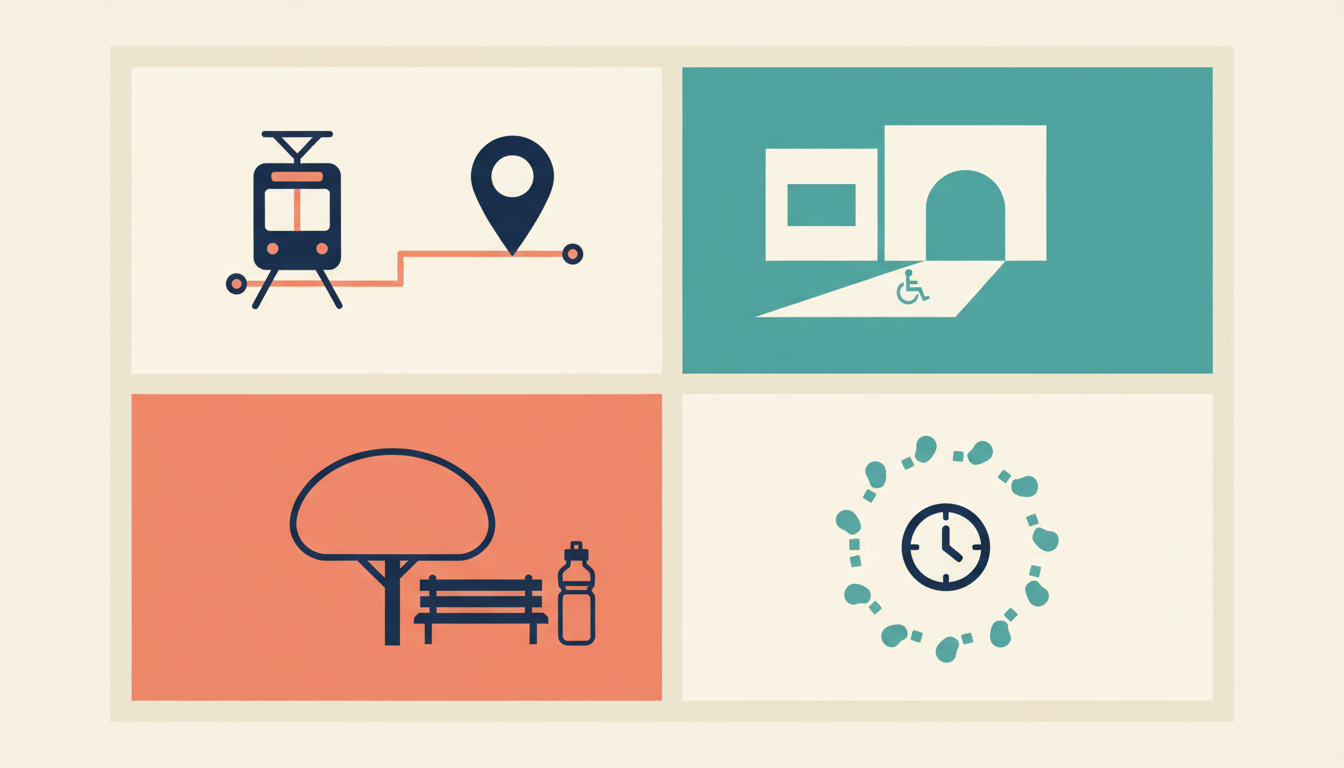
CITY VISIT IN FOUR STEPS
Transit → Attraction → Rest → Return
7. Two fictional city trip designs
Option A: Art and architecture. One day centers on a museum with an accessible entrance and available seating. After a simple lunch, the group chooses either a short garden walk or a return to the hotel. The following morning might feature an architectural boat or bus tour only if the provider confirms the actual access and boarding requirements.
Option B: Neighborhood food and scenery. A visitor chooses a daytime food market, a local transit ride to a scenic district and a café break before returning. The plan avoids long cross-city transfers. These examples are illustrative frameworks and are not presented as tested itineraries in a named city.
8. Check weather and crowd conditions close to departure
Urban surfaces can become slippery after rain, crowded festivals may change transit stops, and hot summer conditions can make open-air queues unpleasant. Check the destination’s actual forecast, transit alerts and attraction notices on the day before and the morning of your visit. Build a backup that does not require a nonrefundable transport change.
Travelers with health or mobility concerns should follow guidance from their own qualified professionals and the service providers involved. This general guide does not offer medical advice, an individual fitness assessment or a guarantee that a location will meet every access need.
9. Five-minute research worksheet
- □ Main attraction selected and real entrance confirmed.
- □ Tickets, timed entry, rates and cancellation rules checked.
- □ Museum or attraction access details reviewed for individual needs.
- □ Transit boarding, station features and current alerts checked.
- □ Comfortable walking route and one alternative identified.
- □ Seating, drinking water, restrooms and meal stop located.
- □ Weather-safe indoor backup ready.
- □ Return route and emergency contact saved offline.
Frequently asked questions
Is every U.S. museum fully accessible?
A federal accessibility framework applies to many public accommodations, but particular buildings, services, routes, temporary conditions and reasonable modifications differ. Ask the museum for details relevant to your visit; do not assume every entrance or exhibit is identical.
Can I count on a senior transit discount after age 50?
No. Age thresholds, residency conditions, applications and identification requirements vary. Check the local transit agency’s official current fare policy rather than guessing.
Do I have to avoid walking to make the trip comfortable?
Not at all. The purpose is choice. Some travelers prefer long walking loops; others choose shorter accessible paths or alternate transportation. Base the plan on your own preferences, physical conditions and destination details.
Official sources and editorial disclosures
- U.S. Department of Justice — Public Accommodations and the ADA
- ADA Title III Regulations
- Federal Transit Administration — Accessible Transportation Regulations
- National Weather Service — Local Forecasts
Reviewed October 11, 2026. This article is general independent research-based travel guidance, not a firsthand assessment of a real museum or city route. Images show conceptual situations only. Accessibility, schedules, fares, opening hours and transit service must be checked with the particular operators before travel.

