

ATM & CURRENCY FEES ABROAD
2026 · Local Currency · DCC · Safer Cash
Quick answer: Overseas card and ATM costs come from more than one place: your bank or card issuer, the ATM operator and sometimes the merchant or ATM’s proposed exchange rate. If a foreign terminal offers to bill you in your home currency through Dynamic Currency Conversion (DCC), check the offered exchange rate and markup carefully. Paying in the destination’s local currency often avoids the additional DCC markup, although your own bank may still apply foreign transaction fees.
Travel Ready After 50 provides clear questions for real travelers, not a promise that any bank card is best for everyone. The goal is to be able to pay for a meal, make a small cash withdrawal and return home with understandable transaction records rather than surprise charges.
Find the payment choice you need
Three costs that are easy to confuse at an overseas ATM
A. Your own card issuer’s charges
A debit or credit card may include an international transaction fee, ATM withdrawal charge, foreign-currency conversion fee or interest on a cash advance. Terms vary by card and account. In particular, withdrawing cash with a credit card can be treated as a cash advance, carrying fees and interest that are different from an ordinary card purchase. Review your account agreement rather than assuming a ‘travel card’ name means every charge is waived.
B. The local ATM owner’s displayed fee
An independent ATM or local bank may charge an operator fee for a withdrawal. This is separate from your home bank’s fees, and the machine may tell you the amount before completing the transaction. If you dislike the charge, you can often cancel before withdrawal and compare another trusted bank machine. Check the screen and make sure you understand whether it is a fee for the transaction or part of a currency conversion quote.
C. The optional exchange rate proposed by a merchant or ATM
The Visa Dynamic Currency Conversion explanation describes how a retailer or ATM may offer to convert a purchase or withdrawal into the cardholder’s home currency on the spot. This can include its own exchange rate and markup. The provider should show the local and home-currency amounts, conversion rate and extra fees and offer a meaningful accept-or-decline choice.
Declining DCC does not mean declining the card transaction. It generally means requesting billing in the local currency and allowing the relevant payment network and issuer to handle conversion. You still need to check any card-specific foreign transaction or ATM fees.
Seven checks for safer international cash and card use
1. Read your card’s international fee schedule before leaving
Write down which card you intend to use for purchases and which account you would use for ATM withdrawals. Check foreign transaction fee percentages, any flat ATM charge, relevant card-network charges, daily withdrawal limits, PIN requirements and whether the destination supports your card. The Consumer Financial Protection Bureau points out that not every prepaid card can be used internationally and that certain issuers impose foreign transaction fees. Confirm the actual agreement for each card you carry.
2. Keep a sensible backup but avoid carrying all your money
A small amount of destination cash can cover transport, tips where appropriate, or a place that does not accept cards. Carry a separate backup payment option if practical, and keep it secure rather than in the same bag as your main card. You do not need to exchange a large sum just because the travel destination uses another currency. Security and convenience are part of cost.
3. Choose a trustworthy ATM location and inspect it
When possible, use a bank-operated machine in a reasonably busy, well-lit area rather than an unknown isolated unit. Check for unusual attachments around the card slot or keypad and shield your PIN. Do not accept unsolicited ‘help’ from a stranger standing close to your transaction. If something feels suspicious or the machine malfunctions, cancel and use your bank’s official support method. Do not share your PIN, verification code or full card details.
4. Read the two-currency conversion offer slowly
On some machines or card terminals, you will see an offer to convert into dollars or another home currency. Compare the local currency amount, conversion rate and any fee or markup. Visa says the merchant or ATM must let you choose whether to accept DCC. If you prefer to have your normal network and bank do the conversion, decline the optional currency conversion and choose the transaction in local currency where that option is available. Do not confuse ‘decline conversion’ with canceling the whole withdrawal.
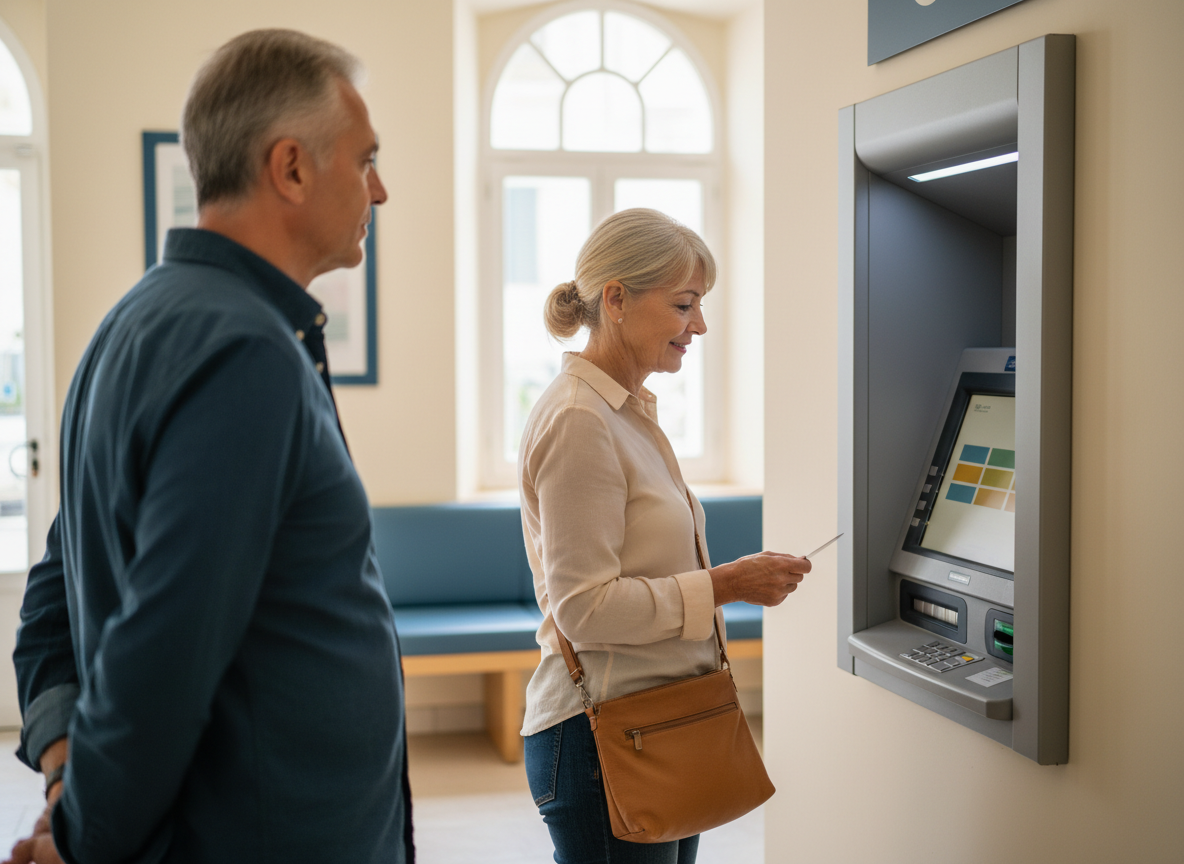
5. Check any ATM operator fee before accepting
After choosing the currency, inspect the withdrawal fee that the operator shows and decide whether to proceed. An ATM could charge its own fee even if you declined DCC. Your home bank may also charge separately, so the amount displayed on the foreign ATM is not always the entire cost. Save the withdrawal receipt and avoid making many tiny withdrawals if your bank charges a fixed amount each time.
6. Take your card, cash and receipt and protect your account
Some ATMs return the card before dispensing money; others do the opposite. Wait until the transaction is fully closed, take every item and move away before organizing your wallet. Do not count a large amount of cash in public. If the machine fails to dispense money or your bank later reports a charge that looks wrong, record its location, date, amount and available receipt and promptly contact your card issuer through a trusted number.
7. Reconcile charges when you return
Compare your saved transactions to the final bank or card statement. Some pending exchange calculations and authorizations may settle later. If you identify an unfamiliar charge, an unapproved home-currency conversion or a missing-money issue, contact the card issuer promptly and follow its dispute procedure. Do not assume every difference is fraud: fees, timing and exchange-rate processing can also affect the final amount.
Home currency versus local currency: what does the choice really do?
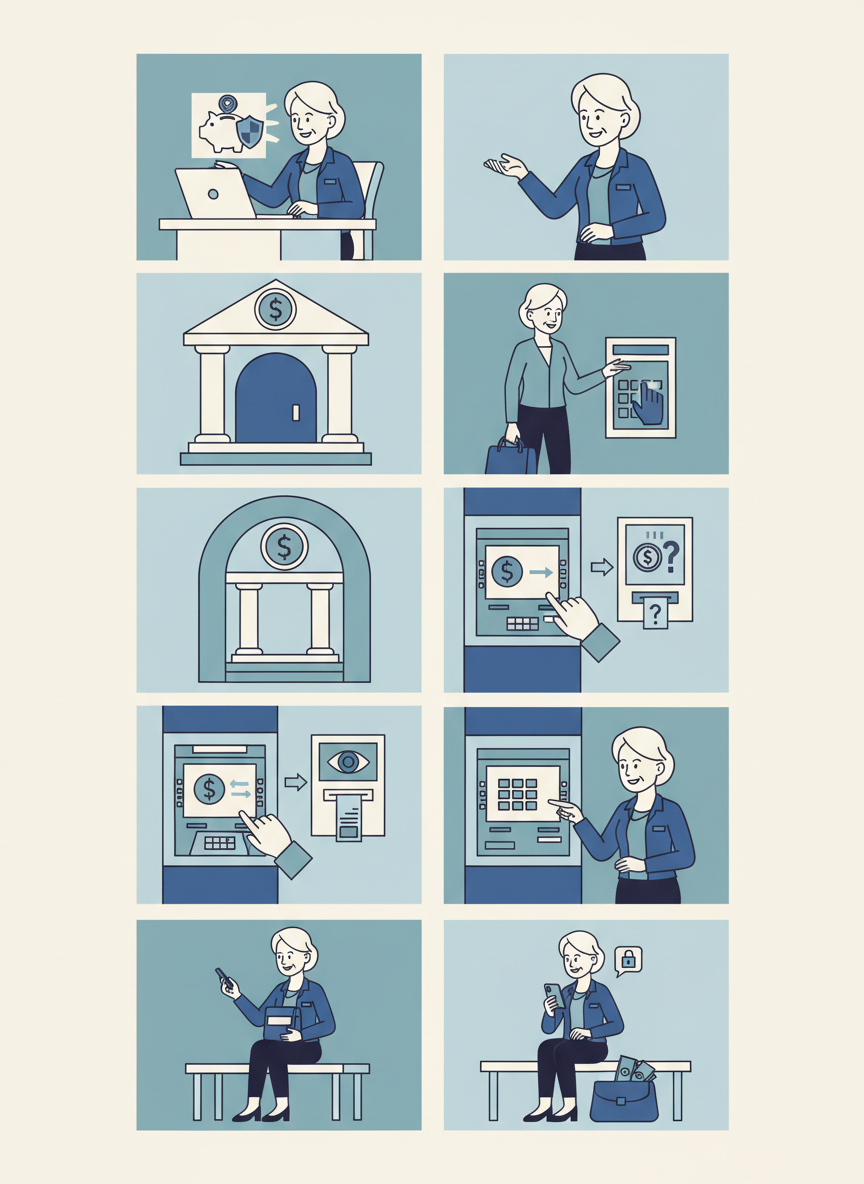
Suppose you are paying for a meal priced in euros. The terminal may offer an immediate conversion into U.S. dollars. The convenience is seeing a familiar amount, but the proposed rate may incorporate a markup. Alternatively, selecting the euro charge lets the applicable network and issuer process the conversion using your card’s terms. Both approaches can involve charges, so the right decision depends on the actual rates and bank agreement. Visa generally advises travelers who wish to avoid DCC markup to choose the local currency.
A purchase of 100 local-currency units is not the same as a withdrawal of 100 home-currency units. Always identify which number refers to the destination’s money and what exchange rate is applied. The text on an ATM can vary—’without conversion,’ ‘decline conversion’ or ‘continue in local currency’ might refer to the same underlying decision. If you do not understand the menu, cancel and use a provider whose instructions you can verify.
Visa’s published travel guidance says conversion displays should explain the amount in both currencies, the exchange rate and the applicable markup. If a terminal pressures you to accept the provider’s conversion, declines to show the required information or appears to select for you, record what happened and tell your card issuer. No travel guide can guarantee that every operator follows the rules.
How to prepare a small travel-money card
- Home bank: verified international customer-service contact and how to lock a lost card.
- Main debit card: international ATM support, total expected issuer charges and withdrawal limit.
- Main purchase card: currency charges and whether overseas transactions are permitted.
- Backup: separate cash or payment method, carried securely.
- Currency choice: decide in advance what your bank says about DCC and local-currency settlement.
- Receipts: store records without posting card numbers, PINs or account screenshots publicly.
- Loss plan: know how to disable a card from your bank’s official app or phone number.
If your payment card goes missing abroad
Contact the issuing bank immediately through a telephone number or application you independently verified before the trip. Ask about locking or replacing the card, emergency cash services if available, and what evidence the bank needs. Do not give PINs or one-time passcodes to someone contacting you unexpectedly, even if the caller claims to be from the bank. Keep important account information in a safe place separate from the wallet, but do not store a complete card number plus security code on an unprotected piece of paper.
If a loss also involves a passport or other travel documents, contact the appropriate official authorities independently. Our travel documents checklist explains how to prepare secure backups. Our travel booking scams guide discusses fraudulent payment requests you may encounter before and during a trip.
Frequently asked questions
Should I always choose local currency at an overseas ATM?
It is often a way to avoid an optional DCC markup, and Visa’s travel guidance recommends local currency for that reason. Still, review the actual presented rate and your issuer’s fees rather than treating one choice as universally cheapest in every situation.
Does choosing local currency eliminate all international fees?
No. Your bank’s foreign transaction or cash withdrawal charge and the ATM owner’s separate surcharge may still apply.
Can I use a credit card at an ATM like a debit card?
A cash withdrawal on a credit card is usually a cash advance subject to the card’s cash-advance terms, which may involve immediate interest and additional fees. Check before doing it.
Is it safe to use any airport currency-exchange kiosk?
An authorized kiosk may be legitimate, but convenience, exchange rate, commissions and other costs differ. Compare the full amount you receive and confirm the provider before exchanging money; do not use a stranger’s unsolicited cash offer.
Will the bank refund money automatically if an ATM fails?
Not automatically. Promptly report the date, location and amount to the issuer, keep records and follow the applicable dispute procedures. Timelines and rights vary by account and jurisdiction.
How much cash should I carry?
There is no single correct amount. Consider local card acceptance, the duration of your stay, travel plans, personal security and destination cash reporting rules. The goal is practical backup cash, not unnecessary bulk.
Official sources and related planning tools
- Visa — Dynamic Currency Conversion: local versus home currency and required disclosures.
- Visa — international travel preparation, overseas ATM and card tips.
- Consumer Financial Protection Bureau — prepaid card international use and fees.
- Consumer Financial Protection Bureau — rules and interpretation of foreign transaction and cash-advance finance charges.
- Build a realistic travel budget · Avoid travel booking scams · Start Here.
Editorial check: October 11, 2026. This is general travel-money education, not individualized banking or financial advice. Actual card terms, exchange rates, foreign ATM fees and dispute rights vary; the card issuer’s current agreement is authoritative. Images are AI-generated educational illustrations, not real documented transactions.

